

What is V2X?
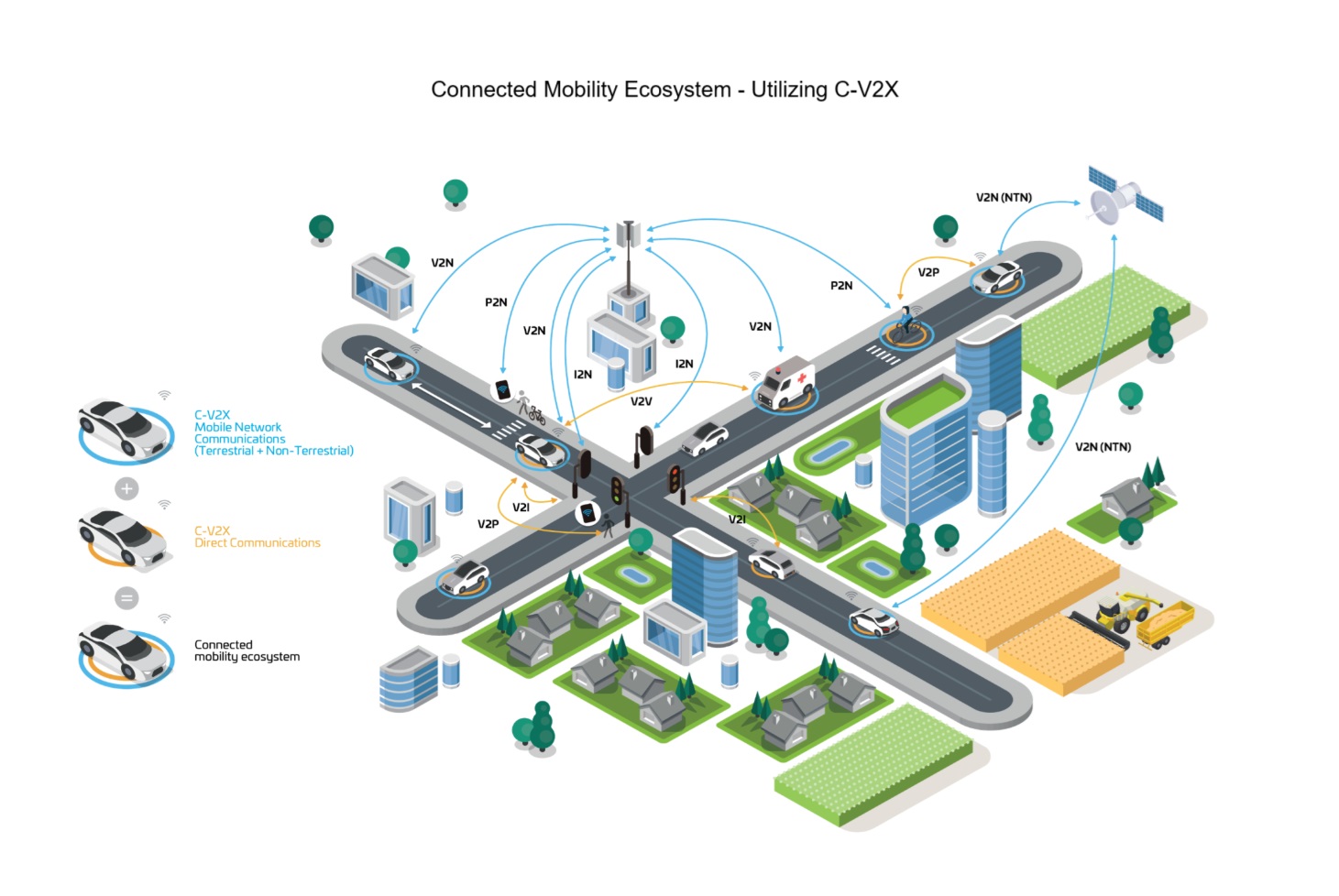
Vehicle to Everything (V2X) is an advanced communication technology that enables vehicles to interact with various elements in their environment, significantly enhancing safety, efficiency, and the overall driving experience. V2X encompasses several key components: Vehicle to Vehicle (V2V), which facilitates communication between vehicles to prevent collisions and improve traffic flow; Vehicle to Infrastructure (V2I), allowing vehicles to communicate with traffic signals, road signs, and other infrastructure to optimize routes and reduce congestion; Vehicle to Pedestrian (V2P), which enhances safety by alerting drivers to nearby pedestrians; and Vehicle to Network (V2N), enabling vehicles to connect to the broader internet for real-time data exchange.
C-V2X or Cellular Vehicle-to-Everything is one of the leading technologies enabling V2X using cellular technology (LTE and 5G)
The V2X market is projected to experience substantial growth, driven by the increasing demand for connected vehicle technologies and improvements in road safety. As the automotive industry moves toward fully autonomous vehicles, V2X is expected to play a crucial role in enabling seamless communication between vehicles and their surroundings. This integration will not only enhance traffic management and reduce accidents but also support the development of smart cities by creating more efficient transportation networks. The future of V2X looks promising, with ongoing advancements in 5G technology and the Internet of Things (IoT) paving the way for more sophisticated and reliable vehicle communication systems.
Main Features of V2X or Vehicle to Everything
- Vehicle to Vehicle (V2V): This feature allows cars to communicate with each other, sharing vital information about speed, direction, and road conditions. This communication can help prevent collisions by alerting drivers of potential dangers ahead.
- Vehicle to Infrastructure (V2I): V2I connects vehicles with road infrastructure such as traffic lights and signs. This interaction can optimize traffic flow by providing real-time updates on traffic conditions and signal changes.
- Vehicle to Pedestrian (V2P):This aspect focuses on enhancing safety for pedestrians by allowing vehicles to detect nearby pedestrians and communicate with them through alerts or warnings.
- Vehicle to Network (V2N):V2N involves connecting vehicles with broader networks such as cloud services or data centers. This connection enables the exchange of information related to navigation, weather updates, and more.
Top players in the V2X market
Several top companies are at the forefront of developing Vehicle-to-Everything (V2X) technology. Among these leaders are prominent automotive manufacturers such as Ford, General Motors, and Toyota. These giants are not only enhancing their vehicle offerings but are also investing in research and development initiatives aimed at integrating V2X capabilities into their fleets. These are the key players in the industry today:
- Qualcomm: A pioneer in C-V2X (Cellular Vehicle-to-Everything) technology, integrating it into its Snapdragon Digital Chassis platform. Their solutions support both direct communication (PC5) and network-based communication (Uu) using 4G and 5G. Qualcomm has recently acquired Autotalks widening its V2X portfolio and aiming to enhance traffic efficiency through widescale deployments.
- LG Electronics: LG is advancing V2X through its software-defined vehicle (SDV) architecture, emphasizing cybersecurity and interoperability. It has developed V2X transceiver modules for Volkswagen’s MQB and MEB platforms and was the first Tier 1 supplier to receive Common Criteria certification for V2X security.
- Continental: Continental offers a Hybrid V2X solution that supports both DSRC (Dedicated Short-Range Communications) and C-V2X standards, enabling global compatibility. Their platform integrates 4G/5G connectivity with direct V2X communication, allowing vehicles to exchange real-time data with infrastructure and other road users—even in areas without mobile coverage.
- Huawei: Huawei is deeply involved in building city-scale C-V2X networks, notably in China. Their end-to-end solutions include RSUs (roadside units) and T-Boxes. Huawei also developed a comprehensive C-V2X network test solution in partnership with China Mobile to ensure high-quality, low-latency communication for autonomous driving and smart transportation.
- Volkswagen: VW was the first major automaker to integrate V2X as standard in its production vehicles – like ID lineup. These models use DSRC-based V2X technology to support cooperative safety features. VW’s early adoption has helped accelerate V2X infrastructure deployment across Germany and Europe, aligning with the Vision Zero initiative for road safety.
- Ericsson: Ericsson provides the cellular infrastructure for C-V2X through its 4G and 5G networks. Their platform supports wide-area V2X communication without the need for roadside units, making it scalable and cost-effective for wider deployment.
- Autotalks: Autotalks specializes in V2X chipsets that support both DSRC and C-V2X. Their technology enables vehicles to “see” around corners and through obstacles, enhancing safety beyond the line of sight. Now part of Qualcomm, Autotalks continues to develop dual-mode V2X solutions for vehicles, infrastructure, and micromobility.
- Harman: A subsidiary of Samsung, Harman has developed a Dual-Mode V2X system that supports both DSRC and C-V2X, giving automakers flexibility across regions. Their Ready Aware platform delivers real-time, cloud-based contextual alerts to drivers, helping OEMs meet Euro NCAP 2026 safety standards.
As the automotive industry continues its shift towards smarter transportation solutions, V2X stands out as a pivotal innovation that promises safer roads and improved mobility for all users.