
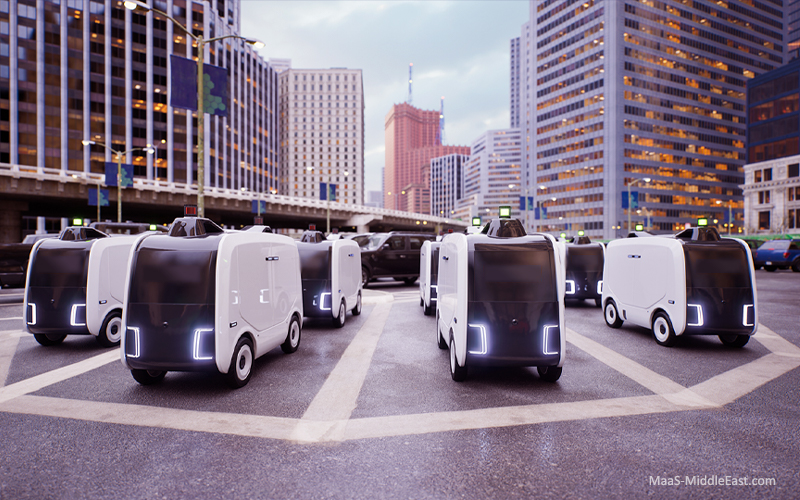
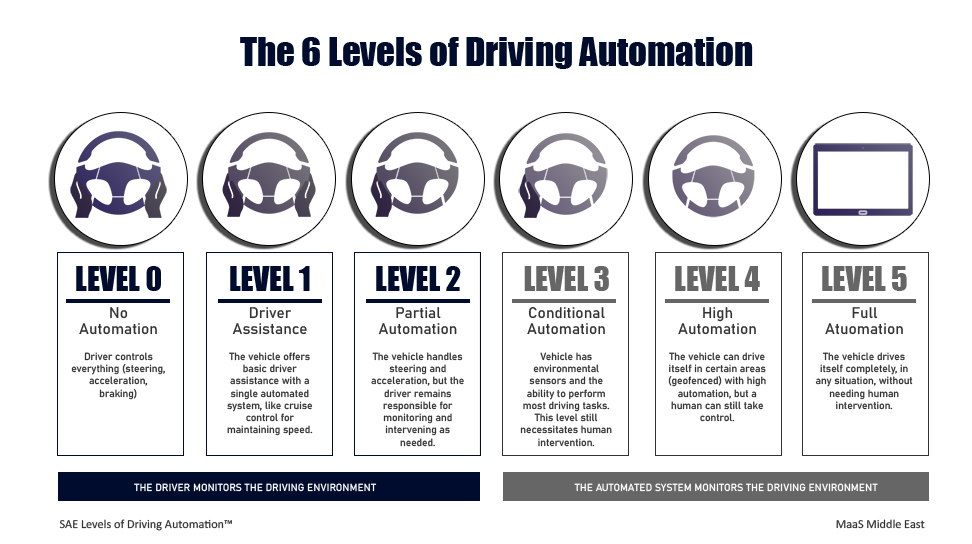
Urban mobility is shifting toward full autonomy, anchored by the technical framework defined by SAE International. This classification ranges from Level 0, where a human driver maintains complete manual control, to Level 5, representing unrestricted autonomous driving in all environments. Levels 1 and 2 cover standard driver-assistance features like lane-keeping and adaptive cruise control, requiring constant human oversight. Level 3 allows conditional autonomy, stepping in under specific situations while expecting the human to take over when prompted. The industry’s commercial battleground sits at Level 4. At this level, vehicles handle all driving tasks within designated geofenced zones without requiring human backup. Operators in this space deploy driverless fleets to carry passengers across major urban communities, competing on fleet scale, manufacturing costs, and software reliability.
Today, multiple robotaxi operators are competing for leadership and ultimate deployment for autonomous mobility. Notably among these players are Waymo, Baidu, Tesla, Zoox, Wayve, and others. In this article we spotlight the major milestones for these industry leaders in the race to full autonomy deployment.
Waymo
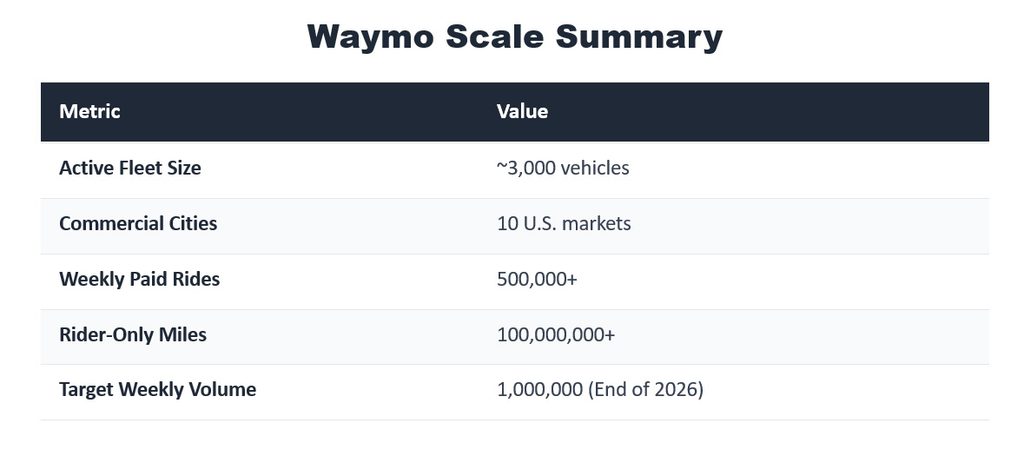
Waymo, operating under Alphabet Inc., maintains the largest commercial Level 4 robotaxi operation globally. The company operates approximately 3,000 active vehicles across its service zones. By early 2026, Waymo had expanded its full commercial operations to 10 U.S. cities, offering entirely driverless rides with no safety drivers behind the wheel and no active remote steering intervention.
Waymo, operating under Alphabet Inc., maintains the largest commercial Level 4 robotaxi operation globally. The company operates approximately 3,000 active vehicles across its service zones. By early 2026, Waymo had expanded its full commercial operations to 10 U.S. cities, offering entirely driverless rides with no safety drivers behind the wheel and no active remote steering intervention.
Safety metrics published by the company indicate a significant departure from baseline human crash statistics. Waymo reported 91 percent fewer serious injury crashes compared to human drivers operating in the same geographic zones.
Expansion plans for 2026 target 10 or more additional U.S. cities. Internationally, Waymo set London as its first entry point outside the United States, with initial commercial operations scheduled to launch within the calendar year.
Baidu Apollo Go
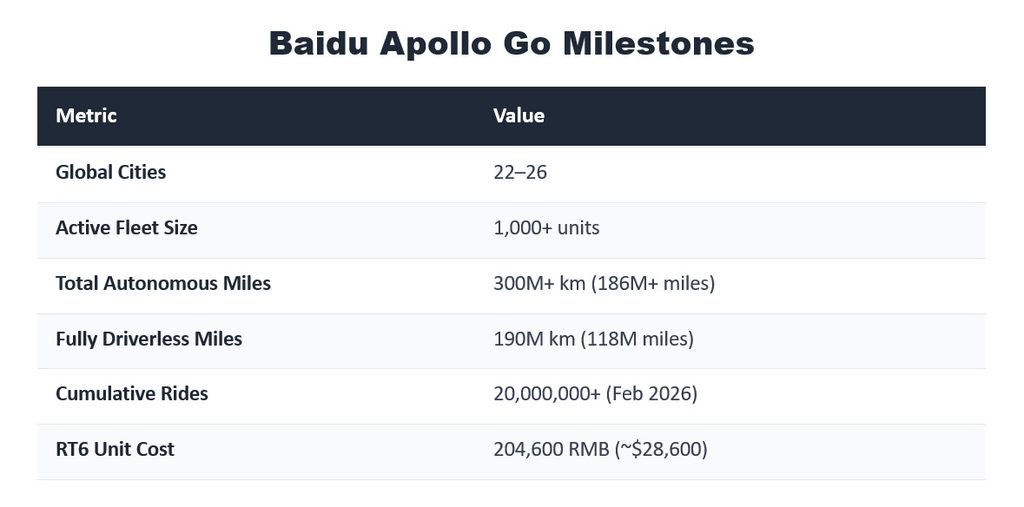
Baidu operates its autonomous transport network through Apollo Go, establishing one of the largest Level 4 networks across Asia and selective global test hubs. Apollo Go operates across 28 cities globally, maintaining primary concentration in major Chinese metropolitan centers like Wuhan, Beijing, and Shenzhen.
The global fleet size for Apollo Go exceeded 1,000 robotaxis as of the first quarter of 2026. A primary driver of this scaling process is the sixth-generation RT6 vehicle platform. Baidu reduced manufacturing costs per unit allow the company to scale fleet deployment without proportional increases in capital expenditure.
Baidu Apollo Go in the Middle East
Baidu’s Apollo Go is steadily strengthening its autonomous mobility presence in the Middle East, now operating driverless taxi services in both Dubai and Abu Dhabi. The first deployment began in Abu Dhabi in January 2026, followed by the launch of its initial commercial service in Dubai in April. These back‑to‑back rollouts demonstrate the region’s growing readiness for large‑scale autonomous transport, with Apollo Go’s operations serving as a key milestone in advancing Level 4 robotaxi adoption and integrating fully driverless mobility into everyday urban travel.
Tesla
Tesla maintains a distinct split between its consumer electric vehicle software and its dedicated commercial mobility platforms. Consumer vehicles equipped with Full Self-Driving (FSD Supervised) function strictly as SAE Level 2 driver-assistance systems. The human operator must supervise vehicle operations continuously, remaining legally responsible and ready to steer, brake, or accelerate at any time
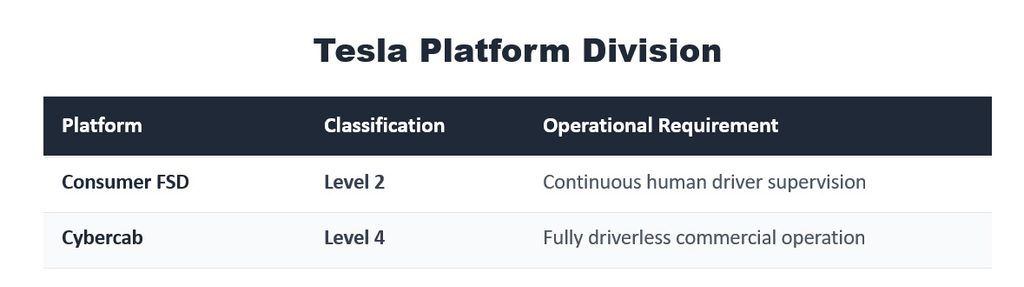
Tesla’s transition into commercial Level 4 autonomy has accelerated further with the recent unveiling of its Cybercab driverless taxi service, a purpose‑built vehicle designed for fully autonomous ride‑hailing. Following Texas’s authorization on May 28, 2026, which allowed Tesla to operate commercial driverless vehicles under the state’s autonomous vehicle legislation, the Cybercab platform has now moved into active deployment as a certified Level 4 robotaxi fleet. The latest Cybercab update thar was teased publicly with a vehicle featuring no steering wheel, no pedals, and no manual controls, reinforces its classification as a true unsupervised autonomous vehicle, engineered specifically for commercial self‑driving operations rather than consumer use. Tesla’s Level 4 approval applies solely to the Cybercab fleet, meaning all consumer Tesla models remain classified as Level 2 and continue to require full driver supervision. The launch of Cybercab services marks a pivotal step in Tesla’s strategy to scale autonomous mobility, signaling a shift toward purpose‑built robotaxis that operate independently of human drivers and redefine the future of on‑demand transportation.
Zoox
Zoox, a subsidiary of Amazon, approaches driverless cars by engineering custom hardware from the ground up rather than retrofitting production passenger vehicles. The Zoox vehicle features a bi-directional, carriage-style interior without manual controls, pedals, or a designated driver seat.
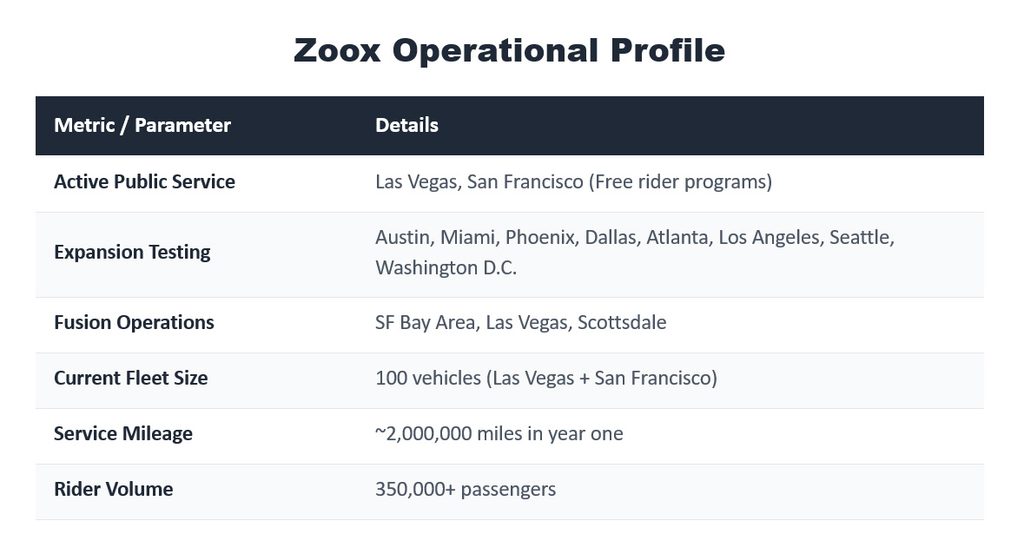
The company operates public ride services in Las Vegas along the Strip and in San Francisco through the Zoox Explorer program. Zoox tests and prepares deployment operations across multiple U.S. markets including Austin, Miami, Phoenix, Dallas, Atlanta, Los Angeles, Seattle, and Washington D.C.
The National Highway Traffic Safety Administration granted Zoox its first commercial exemption under Part 555 in July 2026. This federal approval lets the Amazon subsidiary deploy passenger rides for pay in its custom, bidirectional robotaxi, a vehicle designed without a steering wheel, pedals, or any manual controls.
Wayve
Wayve occupies a distinct role in the autonomous transport market. Unlike fleet owners like Waymo or Baidu, Wayve does not manufacture or manage proprietary vehicle fleets. The company develops software, building an end-to-end artificial intelligence driver designed to operate without high-definition (HD) maps.
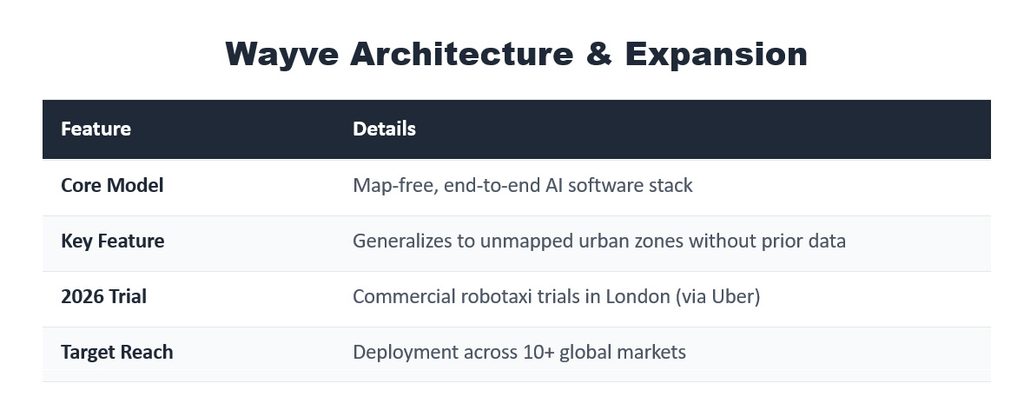
Traditional Level 4 systems rely on detailed prior mapping of every street, curb, and sign within an operational domain. Wayve’s machine learning model processes visual inputs and sensor data directly to make driving decisions, allowing the software to generalize and navigate unfamiliar urban environments without pre-existing map coverage.
Commercial deployment relies on strategic integration with established mobility networks. Wayve partnered with Uber to run its first commercial robotaxi trials in London during 2026. Through this Uber partnership, the company plans to scale its end-to-end autonomous driving software across 10 or more international markets, integrating its AI stack directly into third-party partner fleets.
Building the Autonomous Grid
Scaling commercial robotaxis requires solving complex operational hurdles beyond the core driving software. Expanding these fleets demands reliable charging networks, strong data management, and dense urban infrastructure designed for high vehicle turnover. Regulators must balance public safety with software deployment, while operators face the realities of grid capacity and long-term capital expenditure.
Looking ahead toward 2030, the industry is approaching a sharp tipping point. AI model breakthroughs are slashing the time it takes to map and launch new cities from years down to months, while next-generation vehicle hardware drops per-mile costs well below human ride-hailing rates. As operational footprints expand from dozens of cities into nationwide networks, driverless transit will transition from a novelty rideshare alternative into the core backbone of urban public transport. The shift from human-driven fleets to autonomous networks is no longer a distant theoretical test, it is an active infrastructure rollout unfolding across major cities worldwide.